
Why Fractional CMO Support Is Becoming Essential for Growth-Stage Companies
Marketing activity is everywhere, yet many companies still struggle to produce consistent growth. Teams are publishing content, running campaigns, and investing in tools, but without senior marketing leadership guiding those efforts, the results often feel scattered or disconnected from real business outcomes.
This article explores why fractional CMO support is gaining traction with growth-stage companies, the gaps that experienced marketing leadership can help solve, and the specific moments when part-time executive marketing guidance can accelerate launches, fix broken strategies, and build stronger marketing systems.
There is a reason the conversation around fractional marketing leadership is getting louder.
It is not just because budgets are tight. It is not just because AI is changing how work gets done. And it is not just because hiring has become more complicated.
It is because a lot of companies still need senior marketing judgment, but they do not always need, want, or have the budget for a full-time executive hire.
That gap is exactly where the fractional CMO model becomes useful.
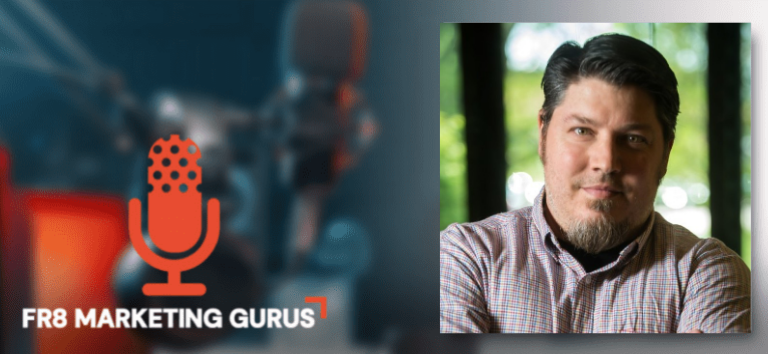
In a recent Freight Marketing Gurus conversation, Jennie Malafarina sat down with Mark Bouffard, founder of Traction Bridge, to talk about what companies really need from modern marketing leadership, where fractional support fits, and why experienced marketers can often create faster results than a full-time hire that takes months to scope, recruit, onboard, and ramp.
The conversation was timely for a lot of reasons. AI is changing expectations. Hiring teams are moving more cautiously. Companies are trying to keep momentum without overbuilding headcount. And in many cases, the real need is not a giant marketing department. It is a senior leader who can step in, see the problem clearly, and move the business forward.
That is what makes the fractional CMO conversation worth paying attention to right now.
What Traction Bridge is actually solving
Traction Bridge connects experienced senior marketers with contract and fractional opportunities, primarily for small to midsize businesses.
The focus is not traditional recruiting and it is not a classic agency model either.
It sits in a different place.
The core idea is simple: many companies do not need a permanent full-time executive to solve every marketing challenge. They need experienced leadership at specific moments when the business needs to:
- launch a new product or service
- course-correct a marketing problem
- create structure where no real marketing system exists yet
That is a much sharper use case than “we should hire someone in marketing.”
And that sharpness matters.
A lot of businesses are not struggling because no one is doing any marketing. They are struggling because the existing effort lacks leadership, cohesion, prioritization, or strategic clarity.
That is where fractional support starts to make sense.
Why the fractional CMO model is gaining traction now
A few years ago, some companies still treated fractional leadership like a temporary workaround.
Now it looks more like a smart operating model.
That shift is happening for a few reasons.
1. Full-time hiring is expensive in ways people often underestimate
Mark made a point that will sound familiar to anyone who has ever had to build a marketing team from scratch.
A full-time hire is not just salary.
It is everything that comes with the hire:
- benefits
- insurance
- PTO
- management overhead
- ramp time
- internal alignment
- role definition
- culture fit
- long-term commitment
That is a real investment.
And while that investment may absolutely make sense for the right business, it is not always the right answer for a company trying to solve a defined near-term marketing problem.
In some cases, the business does not need permanent headcount. It needs senior-level help right now.
2. Many companies need results faster than a full hiring cycle allows
If a product launch is stalled, if positioning is unclear, if lead flow is underperforming, or if the digital program feels disconnected, the company often cannot afford to wait through months of recruiting, onboarding, and organizational trial-and-error.
That is one of the strongest arguments for fractional marketing leadership.
You are not starting from zero. You are bringing in someone who already understands how to assess the problem, how to prioritize the work, and how to move quickly.
That speed is not about rushing. It is about experience.
As Jennie pointed out in the conversation, senior marketers do not take less time because they are sloppy. They take less time because they have done the work before, understand the patterns, and know how to get to the important answer faster.
The real value of a fractional CMO is judgment
This is the part that gets missed most often.
A fractional CMO is not just useful because they are part-time. They are useful because they bring judgment.
That judgment shows up in a lot of ways:
- diagnosing the actual marketing problem instead of the symptom
- knowing which channels deserve budget and which do not
- identifying where messaging is breaking down
- connecting marketing execution back to business outcomes
- recognizing when the issue is strategy, structure, process, content, UX, or team design
That is why Mark’s point about being “afraid of bad answers, not bad data” stood out.
Bad data can be investigated. Bad answers send a business in the wrong direction.
And that is exactly the type of mistake that experienced leadership helps prevent.
AI makes senior marketing leadership more important, not less
There is a lot of noise right now around AI replacing marketing roles.
Mark’s view was much more practical, and frankly, much more useful.
AI is a tool. It is not a strategy.
That line matters.
Companies can absolutely use AI for efficiency, research, ideation, draft generation, and support work. That is real. But none of those things remove the need for strategic marketing leadership. If anything, they raise the bar for it.
Because once tools make it easier to produce more output, the real question becomes:
What are we trying to accomplish, and is this actually helping?
That is a leadership question.
AI can generate options. It cannot decide which option makes sense for the business, the market, the buyer, and the current growth stage.
That is why fractional CMOs and experienced senior marketing operators are so valuable right now. They can help companies use new tools intelligently rather than just piling more activity into an already messy system.
The three moments when fractional support is most valuable
One of the most useful parts of the conversation was Mark’s framing of the three most common reasons companies seek contract or fractional marketing support.
1. Launching a new product or service
This is a classic moment when leadership matters.
A new product launch is not just about copy, a landing page, and some emails. It usually requires:
- positioning
- audience definition
- channel strategy
- offer clarity
- sales enablement
- measurement
That is hard to do well if no one is owning the full picture.
A fractional CMO can step in, build the structure, help the team prioritize, and create a launch plan that is tied to outcomes instead of just deliverables.
2. Course-correcting a marketing problem
This may be the biggest use case of all.
A lot of businesses know something is off, but they are not always sure where the real issue lives.
Maybe leads are down. Maybe content is being produced but not converting. Maybe paid media is underperforming. Maybe SEO is slipping. Maybe there is plenty of activity but not much commercial movement.
In those situations, what the company needs is not more random execution. It needs someone who can look at the system, isolate the real issue, and guide the right fix.
That is exactly the kind of work experienced fractional leadership is built for.
3. Building a structure that does not exist yet
A surprising number of companies have marketing activity without a true marketing system.
They may have:
- a website
- some campaigns
- a few tools
- a CRM
- outside vendors
- a junior internal resource
But they do not have a coherent engine.
That is where a fractional CMO can be especially valuable. They can help create the structure that makes everything else more effective, whether that means building a reporting framework, defining handoffs, clarifying roles, creating a content strategy, or aligning paid, owned, and earned efforts into something that feels intentional.
Why this is better than just hiring for every problem
This does not mean full-time hiring is wrong.
It means companies should get more honest about what kind of problem they are actually trying to solve.
If the need is long-term ownership of a core function with enough ongoing work to support a full-time role, hiring may make total sense.
But if the need is more defined, more urgent, or more strategic than operational, fractional support can often create a better outcome.
It can also be a smarter financial decision.
You are not paying for a permanent seat before you know exactly what the long-term role should look like. You are bringing in someone who can help move the business forward and, in some cases, even help define what the future internal team should become.
That kind of flexibility is valuable.
The companies that benefit most
The businesses that seem best positioned for this model are often:
- growth-stage companies
- founder-led businesses
- companies in transition
- teams that need senior strategy but not full-time executive cost
- organizations that know something is broken but need expert help diagnosing it
In many of these cases, the real bottleneck is not effort. It is decision quality.
That is why experienced fractional leadership can have such outsized impact.
What this means for the future of marketing work
One of the most interesting parts of this broader shift is that it changes how companies think about marketing talent.
Instead of viewing every need through the lens of permanent headcount, businesses can get much more precise.
They can ask:
- Do we need a builder or an operator?
- Do we need strategy or execution?
- Do we need someone to fix, launch, or architect?
- Do we need this forever, or do we need it right now?
Those are much better questions.
And they tend to lead to better decisions.
That is why the fractional CMO conversation is not just a trend story. It is a business model story. It reflects a more flexible, more honest, and in many cases more efficient way of building marketing capability.
Final thought
The strongest part of this conversation was not just the case for contract or fractional marketing help.
It was the reminder that what companies really need is not more motion. They need better leadership.
That leadership may come from a full-time CMO. It may come from a fractional CMO. It may come from a senior marketing operator who steps in for a defined window of time.
But however it shows up, the need is the same.
Companies need people who can:
- see the full picture
- ask better questions
- connect tactics to outcomes
- and help the business move forward faster, with less waste
That is what makes the fractional model so compelling right now.
Not because it is trendy.
Because for a lot of companies, it is simply the smarter way to get the marketing leadership they actually need.
FR8 Marketing Gurus
A podcast where freight, logistics, and supply chain leaders come to talk real marketing.