
The Powerful Art of Storytelling in Marketing: Creating Real Connection in an AI World
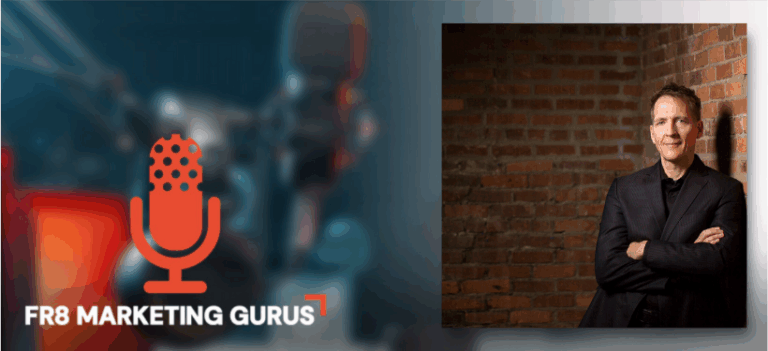
Storytelling in marketing has never been more powerful—or more necessary. In an age when automation and AI dominate communication, the brands that stand out are the ones that still feel human. Jimmy Gibson, VP of Brand Communication at Thrive Agency, has spent his career bridging two unexpected worlds—marketing strategy and stage magic—to help companies connect more deeply with their audiences. His “Magic Script” framework proves that the key to modern marketing success isn’t technology alone, but timeless human storytelling.
The Evolution of Marketing: From Mad Men to Machine Learning
Gibson’s career traces the evolution of modern marketing—from print ads and radio jingles to the rise of digital content and AI automation. “When I came out of college, computers were just being used in marketing,” he recalls. “We were literally waxing type on boards to make print ads.”
He watched the industry shift through multiple eras: the Mad Men age of print dominance, the content boom of the 2010s, and today’s automation-heavy landscape. Those who resist innovation, he warns, risk becoming “the next dinosaurs.”
Now, as AI floods inboxes and social feeds with automated content, the brands that win are those that stay human—and that’s the power of storytelling in marketing: it re-centers emotion in an increasingly digital world. As Harvard Business Review explores, storytelling in marketing remains one of the few tools capable of cutting through noise by building trust and emotional connection.
The Personal Brand Renaissance
Podcast host Jennie Malafarina notes that we’ve entered a personal brand renaissance. “I feel like we are in the personal brand era,” she says. “People connect with people, not logos.”
Gibson agrees—and he’s seen data to prove it. When a franchise client introduced a personal branding playbook for its executives and local owners, referrals increased by 30%.
This shift echoes findings from HubSpot, which highlights that audiences respond best to authentic storytelling in marketing that centers real people and values, not polished perfection.
The Magic Script: A Framework for Connection
Gibson’s Magic Script borrows from the psychology of performance magic to structure marketing narratives. Every trick—and every great campaign—follows three stages: Connection, Curiosity, and Conversion.
Connection: The Oxytocin Moment
The first step is establishing trust. “Connection releases oxytocin, the bonding chemical,” Gibson explains. It’s about making your audience feel understood.
For example, in logistics marketing, he might open with:
“You shouldn’t have to wake up wondering where your freight is or if it’ll arrive on time. If your spreadsheets are older than your coffee, it’s time for a new playbook.”
That opening meets the audience in their lived reality—building instant empathy.
Curiosity: The Dopamine Hook
The second stage keeps the audience engaged. Curiosity triggers dopamine, the brain’s reward chemical. “Our clients don’t just check in—they get updates before they even ask,” Gibson says. “It’s like having a personal dispatcher who sees the future.”
This keeps attention high while guiding the story toward a reveal.
Conversion: The Serotonin Payoff
The final act delivers the “aha” moment—the sense that everything makes sense and action feels natural. “That’s the reveal,” Gibson says. “That’s the magic moment in marketing.”
AI: Threat or Opportunity?
While AI has changed how marketers operate, Gibson cautions against letting it replace creativity. “If you hit the easy button on ChatGPT to write your blog post, infuse your personality,” he says. “People are drawn to authenticity—it’s infectious.”
He’s not anti-AI. His team uses it for research, editing, and automation. The danger, he warns, is when brands lose their human fingerprint.
Forbes calls storytelling the future of marketing precisely because technology can’t replicate emotional resonance. As AI creates more content, human stories will become the ultimate differentiator.
Storytelling as Experience
Gibson’s live demonstration of his Magic Script shows how story trumps information. In a podcast appearance, he performed a trick that led host Jennie Malafarina through a mental journey ending in her “randomly chosen” card—the ace of diamonds.
“It wasn’t the reveal,” she said. “It was the journey that made it unforgettable.”
That same principle applies to storytelling in marketing. People don’t just want data—they want to feel something. As Gibson puts it, “We’ve lost the wow factor. We’ve forgotten the magic.”
Scaling Authenticity Across Teams
One of Gibson’s most practical insights is how organizations can scale storytelling through personal branding. “If you love to bake cookies, make that part of your business,” he says. “Let customers feel who you are.”
He recalls one client who incorporated team passions into customer experiences: “When someone visits, they’re greeted with cookies from Susan in purchasing—because that’s her thing.” Those small moments become brand stories people remember.
Authentic marketing doesn’t require massive budgets—it requires consistent intention. As Harvard Business Review notes, stories that reveal personality and purpose outperform polished corporate messaging.
Lessons from the Stage
Perhaps Gibson’s greatest lesson came not from marketing, but from a Broadway director during a magic training session. The exercise: introduce yourself to a group by sharing your name and hometown.
“Most people tried to address the room,” Gibson says. “But the director connected one-on-one—eye contact, smile, pause.”
The result? A room transformed.
“The question is,” Gibson reflects, “is your intention to get words out of your mouth—or to make a connection?”
That distinction defines both great magicians and great marketers.
The Takeaway: Magic Is Human
As we balance AI efficiency with human empathy, the lesson is clear: the magic isn’t in the trick—it’s in the connection.
Brands that use storytelling in marketing to evoke curiosity, emotion, and trust will rise above the noise. The future belongs to marketers who combine data-driven precision with timeless humanity.
If you’re ready to create marketing that moves beyond automation to true connection, start here: Marketing That Moves the Needle.
Or explore more insights on authentic marketing and leadership at the Virago Marketing Blog.
.
Discover Your Marketing Maturity Level
Click the button below to take the assessment.