Building Freight Brands Through Community, Data, and Human Connection
Freight brands face growing pressure to differentiate in a relationship-driven industry where trust and credibility still influence buying decisions. As marketing channels expand, many teams struggle to connect visibility efforts with real business outcomes.
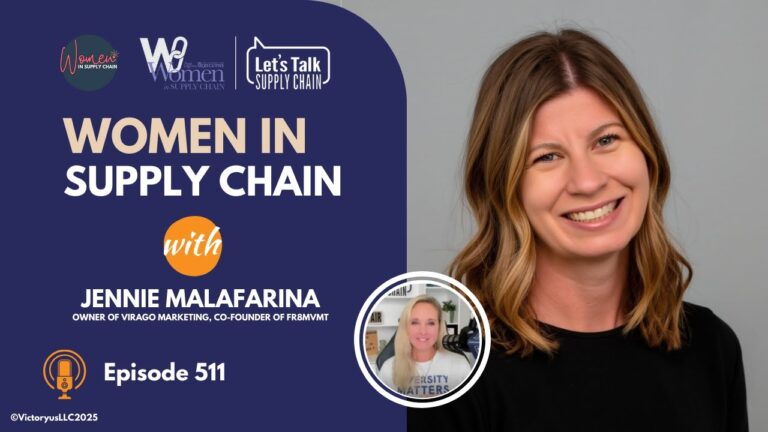
This article highlights insights from Virago Marketing CEO Jennie Malafarina’s appearance on the Women In Supply Chain podcast and breaks down how community, personal branding, and relationship-led marketing are shaping modern freight brands.
The freight and logistics industry often talks about relationships, but far fewer companies understand how deeply those relationships should shape their marketing strategy. At a time when digital channels are more crowded than ever, differentiation no longer comes from louder messaging or bigger budgets.
It comes from clarity, credibility, and connection. That perspective was front and center during Women In Supply Chain™, where Virago Marketing CEO Jennie Malafarina joined Sarah Barnes-Humphrey, founder of Let’s Talk Supply Chain, for a candid conversation recorded onsite at the Women in Supply Chain Forum in Clearwater, Florida.
The discussion moved well beyond tactics, touching on leadership, community building, data-driven decision-making, and why marketing must evolve alongside the freight professionals it serves.
From Communications to Freight Marketing Strategy
Malafarina’s path into freight marketing was not linear, and that is precisely what makes her perspective valuable to industry leaders. With both a bachelor’s and a master’s degree in communication, her early career began in public relations, where she quickly discovered a gap between awareness and accountability.
“We were sending press releases, and my boss was like, ‘I want to know how many customers we got from this,’” Malafarina recalled. “That curiosity pushed me toward wanting to understand how to tie what we were doing back to actual value.”
That curiosity led her deeper into digital marketing, SEO, and paid media, where performance could be measured and refined. Eventually, her career intersected with transportation technology, where she saw firsthand how marketing, operations, and revenue are deeply intertwined.
Why Relationships Drive Revenue in Freight
Freight is often described as transactional, but Malafarina sees it as a relationship-driven ecosystem where trust compounds over time. That reality becomes especially clear when market conditions tighten or products do not perform exactly as promised.
“This industry is so much about relationships and networking,” she explained. “You might not be the perfect fit today, but if people like working with you, they will figure it out together.”
That philosophy informs how she advises freight companies to think about marketing investments. Rather than chasing short-term lead volume, she encourages leaders to consider how visibility, consistency, and trust influence long sales cycles.
Personal Brands Matter More Than Ever
One of the most relevant insights for freight executives is Malafarina’s belief that personal brands increasingly outperform corporate freight brands. Buyers, partners, and even future employees want to engage with people, not logos.
“People don’t connect with brands, they connect with people,” Malafarina emphasized. “The individuals who show up, speak, create content, and participate in the industry are often driving more value than the company name on a banner.”
For leadership teams, this means empowering executives and subject matter experts to be visible and authentic. Personal presence across events, content, and social platforms builds credibility faster than static brand messaging.
Marketing in Freight Is No Longer Behind
A common narrative in logistics is that the industry lags behind others in marketing maturity. Malafarina challenged that assumption, particularly when organizations are willing to invest with intention.
“From a marketing standpoint, trucking and logistics are not lagging anymore,” she noted. “There are organizations that truly value brand, thought leadership, and visibility, and it shows.”
Podcasts, video content, executive thought leadership, and industry storytelling are no longer fringe tactics. They are becoming foundational components of modern freight marketing strategies.
Content Is Evolving and So Should Expectations
Long-form gated content once dominated B2B freight marketing, but consumption habits have changed. Malafarina stressed the importance of concise, digestible, and visual content that respects how busy professionals actually engage with information.
“Nobody is reading a 20-page white paper anymore,” she said. “You need quick facts, statistics, and video that gets to the point.”
She also cautioned leaders to be thoughtful about AI adoption. Accuracy, context, and human oversight remain critical in an industry where credibility directly impacts buying decisions.
Marketing Is Not a Cost Center If You Define Success Correctly
One of the most important mindset shifts Malafarina addressed was how freight companies define marketing success. Without clear objectives, even well-funded campaigns can feel ineffective.
“Most organizations don’t even know what success looks like,” she observed. “They’re focused on revenue without understanding why they’re doing certain activities.”
To reframe that thinking, leaders need to align marketing initiatives with defined outcomes:
- Awareness and credibility that support long sales cycles.
- Relationship building that opens doors over time.
- Enablement for sales and partnerships through consistent messaging.
When expectations align with strategy, marketing becomes a growth driver rather than an expense.
Community as a Strategic Advantage
Community building is not a side project for Malafarina. It is a strategic lever she believes the freight industry has historically underutilized.
“Without drivers and operators, freight doesn’t move,” she stated. “Connecting all aspects of the industry matters.”
By bringing together operators, technologists, marketers, and executives, community-driven efforts reduce silos and create trust before commercial conversations even begin.
Leadership, Balance, and Saying No
Despite running multiple ventures, Malafarina was candid about the importance of balance and boundaries. Sustainable leadership requires knowing when to step back as much as when to lean in.
“I say no sometimes,” she shared. “I’m going to the softball field instead of another conference.”
That approach resonates with freight leaders managing constant demands. Long-term performance depends on prioritization, not just productivity.
Earning Your Seat at the Table
As a woman in a male-dominated industry, Malafarina does not frame her experience through limitation. Instead, she emphasizes confidence, preparation, and ownership.
“I’ve always earned my seat at the table,” she explained. “At the end of the day, everyone is just a person.”
Her perspective reinforces a broader truth for emerging leaders. Expertise and conviction matter more than titles or assumptions.
What Freight Leaders Can Take Away
For freight executives evaluating how to modernize their marketing approach, this conversation offers more than inspiration. It provides a grounded framework for building trust, visibility, and long-term momentum.
The conversation offered practical lessons for executives navigating modern freight marketing:
- Relationships drive revenue more reliably than tactics alone.
- Personal brands accelerate trust faster than corporate messaging.
- Marketing works best when success is clearly defined.
- Community creates leverage that advertising alone cannot replicate.
These insights reflect how freight buyers actually behave and how influence is built over time.
Watch the full Women in Supply Chain podcast episode here.
How Virago Marketing Supports Freight Growth
Virago Marketing exists to help freight and logistics companies turn these principles into execution. The agency works exclusively within trucking, logistics, and transportation technology, aligning marketing strategy with real operational realities.
From positioning and content strategy to digital execution and thought leadership, Virago Marketing helps freight brands build credibility, visibility, and sustained growth. For organizations ready to move beyond disconnected tactics and toward meaningful market impact, Virago provides the expertise to make it happen. Let’s built the strategy your competitors wish they had.
FR8 Marketing Gurus
A podcast where freight, logistics, and supply chain leaders come to talk real marketing.